In short
After 15 years of lessons that were mostly about avoiding wrong notes, I almost quit the piano. Looking back, I had learned to reproduce individual pieces, not to play the piano. There isn't one way to learn the piano: classical music, jazz, blues, pop and improvisation each need different skills. So decide what kind of pianist you want to become, and let that decide what you practise and who you learn from.
- Why learning piece after piece isn't learning to play
- The different directions you can take at the piano
- The one question to ask yourself before you practise
- How to find the right teacher for your goal
- What I'd do differently if I started again today
- Why the joy of making music matters most
What I wish I'd known
Seven things it took me 15 years to understand. Click a time to hear that part of my story.
-
Music stopped feeling like music
Almost every lesson followed the same routine: some finger exercises, then the piece I was learning. "Stop. Wrong note. Again." Correcting mistakes is part of learning an instrument. But somewhere along the way, playing became an endless process of trying not to make any mistakes.
-
Learning pieces isn't learning the piano
I spent weeks learning each new piece note by note. A few weeks after we moved on, I couldn't play it anymore and had to get the sheet music back out. I wasn't learning how to play the piano. I was learning how to reproduce individual pieces, and that's a big difference.
-
There isn't one way to learn the piano
You can spend years learning beautiful classical pieces. You can dive into jazz, with scales and voicings. Or you can learn how chords work, understand patterns and use them to create something of your own. All of this is piano playing, but these are very different skills, and nobody explained that to me when I started.
-
Your training should match the pianist you want to become
Classical music, jazz, blues, pop, improvisation: each of them needs a different set of skills. So what you practise should depend on the pianist you actually want to become.
-
There's a system behind playing freely
I always dreamed of sitting down and playing something beautiful without sheet music. Even people who could do it often couldn't explain how. So I figured it out myself, little by little: chords, inversions, left-hand patterns, rhythm, melody, fills and improvisation. Slowly, all the skills came together.
-
Ask yourself what you want to play
What do you actually want to be able to do at the piano? Your answer should decide what you practise, and who you learn from. If you love classical music, find a great classical teacher. If you want to learn jazz, learn from somebody whose jazz playing inspires you. And if you want to play freely, find someone who can do it and actually explain how it works.
-
What I'd do differently today
I would still learn the fundamentals and how to read sheet music. But I would decide much earlier what kind of pianist I want to become, find a teacher who can help me get there, and follow a structured method where every skill prepares me for the next one. Most of all, choose a way of learning that makes you want to sit down at the piano every day.
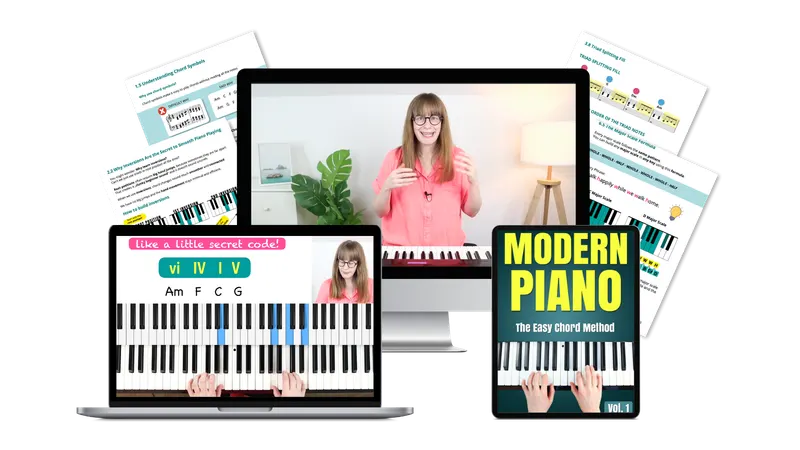 Want to play freely, without sheet music?Modern Piano 1It's the course I wish I'd had when I was learning piano myself: step by step, how to play freely, improvise and express yourself at the piano.Learn more about the course →
Full transcript
Prefer to read along? Here's everything I say in the lesson. Click a time to jump to that moment in the video.
Video transcript · about 1,500 words
Why I almost quit piano after 15 years
I took piano lessons for about 15 years. And after all those years, I reached a point where I thought, I never want to play the piano again. Which is kind of crazy, because I loved music. But after 15 years of lessons, I still had this feeling that I couldn't really play the piano.
And looking back, I think I know what went wrong. And if you are learning piano right now, I think there are a few things you should know much earlier than I did. So give me the next few minutes, because maybe I can save you years of frustration.
And by the way, I've put together a free piano roadmap to help you stop wasting time on the wrong things and focus on the skills that actually move your piano playing forward. You can download it below this video.
You know, I was never really good at one particular instrument, but you could basically put any instrument in my hands, give me a little time, and somehow I would figure out how to make music with it. And I loved experimenting. I loved composing. I loved creating things and expressing my feelings through music. But that's not what I was learning to do in my piano lessons.
The problem with traditional piano lessons
When I was taking piano lessons, almost every lesson followed the same routine. First, some finger exercises and so on and so on. Then we worked on the piece I was learning, and usually it went something like this. I started playing. Ah, stop. Wrong note. Ah, again. There was a wrong note in there. Okay, now here we go. But then: ah, stop. Play the right hand louder than the left hand. Again. Again. Ah, wrong note again. Ah, again, wrong note. Stop and start from the beginning.
And of course, correcting mistakes is part of learning an instrument. But somewhere along the way, music stopped feeling like music. It became this endless process of trying not to make any mistakes.
And I spent weeks learning a new piece note by note. And after a few weeks, I could play it. But then we moved on to the next piece. And a few weeks later, I had already forgotten the old one. I couldn't play it anymore. I was sitting at the piano and tried to remember the piece. Ah, but I couldn't. Yeah. I had to get the sheet music back out and almost relearn everything.
And this happened again and again and again. And at some point I realized I wasn't really learning how to play the piano. I was learning how to reproduce individual pieces. And there's a big difference between those two things, right?
When piano playing became too much pressure
And when I started studying music, there was even more pressure, because now I wasn't just learning pieces. I was being judged on how well I played them. I remember sitting in one particular piano exam with several professors watching me, and the atmosphere was incredibly serious. Every wrong note mattered, and every little mistake mattered. And afterwards, my playing was discussed and judged and graded.
And I remember walking out of the room, and I was feeling very terrible. That was enough for me. And I thought, "Okay, that's it. I'm done. I don't want to play piano anymore. I will never ever touch a piano again." And I really started crying, because deep inside I felt like I was losing my biggest passion because of all these bad experiences.
And there was one thought I just couldn't get out of my head. I've been taking piano lessons for about 15 years or even more. How can I still feel like I can't play? Something didn't make sense. And maybe the problem wasn't me. Maybe the problem was the way I had learned piano.
And I'm really curious: have you ever reached a point where you almost lost the joy of playing piano because your lessons felt too strict or too focused on getting everything right? Let me know this in the comments. I'd really love to hear your story.
Different ways to learn piano
And here is what I wish somebody had told me much earlier. There isn't one way to learn the piano. For example, you can spend years learning to play beautiful classical pieces like this. Yeah. Or you can dive into jazz, learning scales and voicings. Or you can learn how chords work, understand patterns, and use them to create something of your own.
And all of this is piano playing. But these are very different skills. And that's what nobody explained to me when I started. There are so many different directions you can take at the piano: classical music, jazz, blues, pop, improvisation. And each of them requires a different set of skills. So your training should match the pianist you actually want to become.
And by the way, I created a free piano roadmap that goes along with this video. It will help you figure out what kind of pianist you actually want to become and which skills you should focus on, and you can download it completely free. I will leave a link in the description below.
My dream: playing piano without sheet music
I wanted to walk over to a piano, sit down, and just play something beautiful without sheet music. I wanted to experiment. I wanted to create something. I wanted to express myself. Yeah. And just play something like this.
This is what I always wanted to do, but I had absolutely no idea how. Even when I met people who could play like this, they often couldn't explain to me what they were actually doing. And I remember thinking, okay, but how is this possible? How do you know which chords to play? What does your left hand do? Where do these little melodies come from? There had to be some kind of system behind it. But I couldn't find anyone who could teach me how to do it.
How I finally learned piano improvisation
So I started figuring it out myself, little by little: chords, inversions, left-hand patterns, rhythm, melody, fills, improvisation and all that stuff. And slowly, all the skills started to come together.
And that's the reason why I created my own piano method. I wish somebody had shown me years ago, step by step, how to play freely, how to improvise and express myself at the piano. And that's exactly what I teach in my Modern Piano courses. Modern Piano 1 is the course I wish I'd had when I was learning piano myself. So if this is how you want to play the piano, I'll leave a link to Modern Piano 1 below.
What every piano student should know
So if you are learning piano right now, I want you to ask yourself one question: what do you actually want to be able to do at the piano? Do you want to play classical pieces? Do you want to play jazz, blues, your favourite pop songs? Do you want to accompany yourself while singing? Or do you want to sit down without sheet music and simply create beautiful music?
Because your answer should determine what you practise, and it should also determine who you learn from. If you love classical music, find a great classical teacher. If you want to learn jazz, then learn from somebody whose jazz playing inspires you. And if you want to improvise and play freely, find someone who can not only do that, but who can actually explain how it works.
What I would do differently today
If I could go back today and start my entire piano journey again, I would still learn the fundamentals. I would still learn to read sheet music. And I don't regret any of that. Those skills have helped me enormously. So I'm not telling you to stop reading sheet music. I'm not telling you to stop learning classical music. And I'm definitely not telling you that playing without sheet music is easier.
But I would decide much earlier what kind of piano player I want to become. I would find a teacher who can help me get there. And I would follow a structured method where every skill prepares me for the next one. But most importantly, I would choose a way of learning that makes me want to sit down at the piano every day.
Because piano is difficult. There will be frustrating days. But learning the piano should never take away the joy of making music. And that's the most important thing I want you to take away from this video: find the way of learning that matches the pianist you want to become.
And if you are not sure what that looks like for you, download my free piano roadmap below. It took me 15 years to figure this out, and I hope you can find your own path much sooner.
Questions about this video
Should I stop reading sheet music?
No. If I started again today, I would still learn the fundamentals and how to read sheet music. I don't regret any of that, and I'm not telling you to stop learning classical music either.
Is playing without sheet music easier?
No, and I'm definitely not saying it is. It's a different skill. If it's what you dream of, learn it from someone who can do it and who can explain how it works.
How do I know which way of learning is right for me?
Ask yourself what you actually want to be able to do at the piano: classical pieces, jazz, blues, your favourite pop songs, accompanying yourself while you sing, or creating your own music without sheet music. Each needs different skills, so your answer decides what you practise and who you learn from.
Which of your courses teaches playing without sheet music?
Modern Piano 1. It's the course I wish I'd had: step by step, it shows you how to play freely, improvise and express yourself at the piano.